Health concerns rarely announce how serious they are. Pain shows up suddenly. Breathing feels different. A swollen or injured area appears to be alarming however, it’s not too serious. At that point, choosing between an emergency room or walk-in clinic could be a bit confusing. Both are medical facilities but serve different functions.
Knowing how they work allows you to make your choice with ease.
What the ER Is Designed For
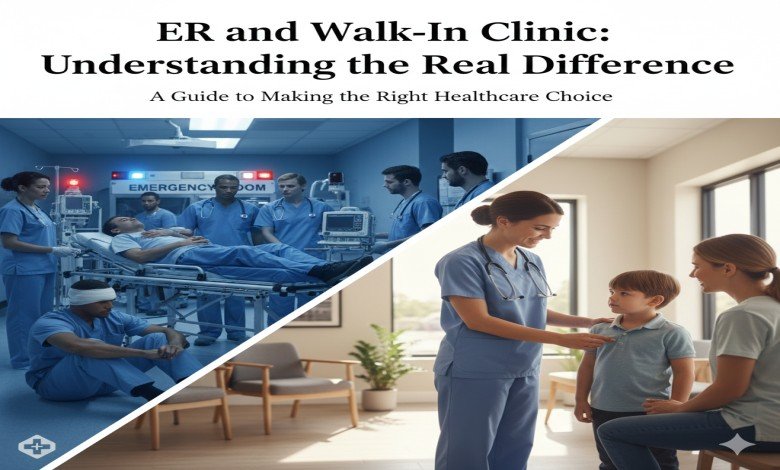
The ER often referred to as the emergency room, or emergency department, has an obvious purpose. It is a response to situations that could compromise organs, life or their long-term functioning. Every system inside the ER supports fast, intensive emergency care.
Doctors in this clinic place patients in order of the severity of their condition, not on arrival time. Patients suffering from chest pain or severe shortness of breath or bleeding that is uncontrolled can move ahead. That system saves lives, but it also explains long wait times for others.
An ER is specifically designed to deal with the most severe circumstances. These rooms treat serious injuries, life-threatening accidents as well as urgent issues. The facilities are available to serve you with latest technology, 24/7 surgeons, and vital healthcare equipment always when the moment is crucial.
However, the ER does not focus on comfort or speed for stable conditions. It is bustling, noisy, loud, and emotional. In the event that your condition or injury doesn’t require immediate intervention the experience may make you feel tensed.
What a Walk-In Clinic Focuses On
A walk-in clinic, sometimes called an outpatient care centre or primary care clinic, serves a different purpose. It addresses immediate health concerns that feel urgent but not dangerous.
This environment supports conditions like minor bone fractures, allergy reactions, minor infections, breathing problems, slight shortness of breath, as well as any other injury or illness that is commonplace. Care remains prompt, yet calm.
Unlike the emergency room, a walk in clinic does not triage based on survival risk. Patients usually receive care in the order they arrive. That approach shortens wait times and reduces stress.
Many clinics follow family medicine principles. Providers look at symptoms while considering overall health. This approach often feels more personal and holistic, even during brief visits.
How the Experience Feels Different
The difference between ER and walk-in clinic shows up quickly after arrival.
The ER focuses on urgency and critical decision making. You may wait for hours if your condition remains stable. The atmosphere reflects constant movement and high pressure.
A visit to a walk-in clinic feels quieter. Staff explain options clearly. The pace allows questions and reassurance. That emotional difference matters, especially during stressful moments.
Both settings deliver professional medical care, but the experience aligns with very different needs.
Care Level and Medical Resources
The ER offers the latest medical emergency facility, with intensive monitoring, high-quality imaging technology, as well as access for experts is always available. The level of care is suitable for emergency situations that are life-threatening.
The clinic is open to walk-in patients and offers basic health services as well as urgent medical services. Diagnostics, X-rays and other basic tests, as well as treatments for common ailments can be found. It is the goal to focus on resolving issues without risk of escalation.
If a clinic identifies a serious concern, referral to the ER is immediately available. That safety net supports confident decision making.
Wait Times and Flow of Care
The wait times cause frustration to many patients. When you’re in the ER lengthy lines often feel like a necessity. The most critical cases are always the first to be addressed even if you arrive sooner.
Walk-in clinics usually move faster. Visits stay shorter. The flow feels predictable. For non-critical concerns, this efficiency supports quicker relief and less anxiety.
Choosing the right setting often saves hours and emotional energy.
Support for New Patients
Access to care remains a common concern. Many clinics welcome new patients, offering support without lengthy registration. This access helps patients without a family doctor receive timely treatment.
The ER never turns patients away, but it does not provide ongoing primary care. Clinics often fill that gap with continuity and familiarity.
Choosing Based on Symptoms, Not Fear
Fear often pushes people toward the ER. That reaction feels natural. Yet, being aware of the symptoms can lead to more informed choices.
Chest pain, extreme breathlessness and sudden confusion or bleeding that is uncontrolled are all reasons to visit the hospital emergency rooms. These symptoms indicate danger.
Stable symptoms, discomfort without danger, and minor injuries usually fit better in a walk-in clinic. Care arrives faster, with less emotional strain.
Final Thoughts
The main difference between ER and walk-in clinics centers on the goal of each and not their quality. Both are essential to the healthcare system. Understanding how they differ will allow better decisions in stressful situations.
Emergency rooms save lives during crisis. Walk in clinics can be a good option for efficiency, convenience and speed for every day medical need. Make the right choice to ensure your wellbeing and tranquility.
Once you are aware of what your symptoms are, the treatment process feels less daunting and much more empowering.
FAQs
When should you visit an emergency room?
Chest pain, severe breathing problems, extreme bleeding, etc. are the sign of emergency medical attention. If you have any of such concerns you should immediately visit an emergency room.
Why choose a walk-in clinic?
A walk-in clinic provides quicker treatment for patients with no life-threatening situations or illness. These clinics often offer shorter wait times and a calmer care centre environment.
How urgent care clinics help?
Urgent care clinics treat moderate concerns needing quick attention. They can help with fractured bones, infected joints, as well as allergic reactions, all without waiting in the emergency room.
What if no family doctor exists?
Clinics often accept new patients without appointments. This access supports family medicine principles while providing reliable primary care for sudden concerns.
When does primary care fit best?
Primary care works best for ongoing conditions and prevention. Immediate issues without severe risk often fit better in clinics or urgent care settings.